
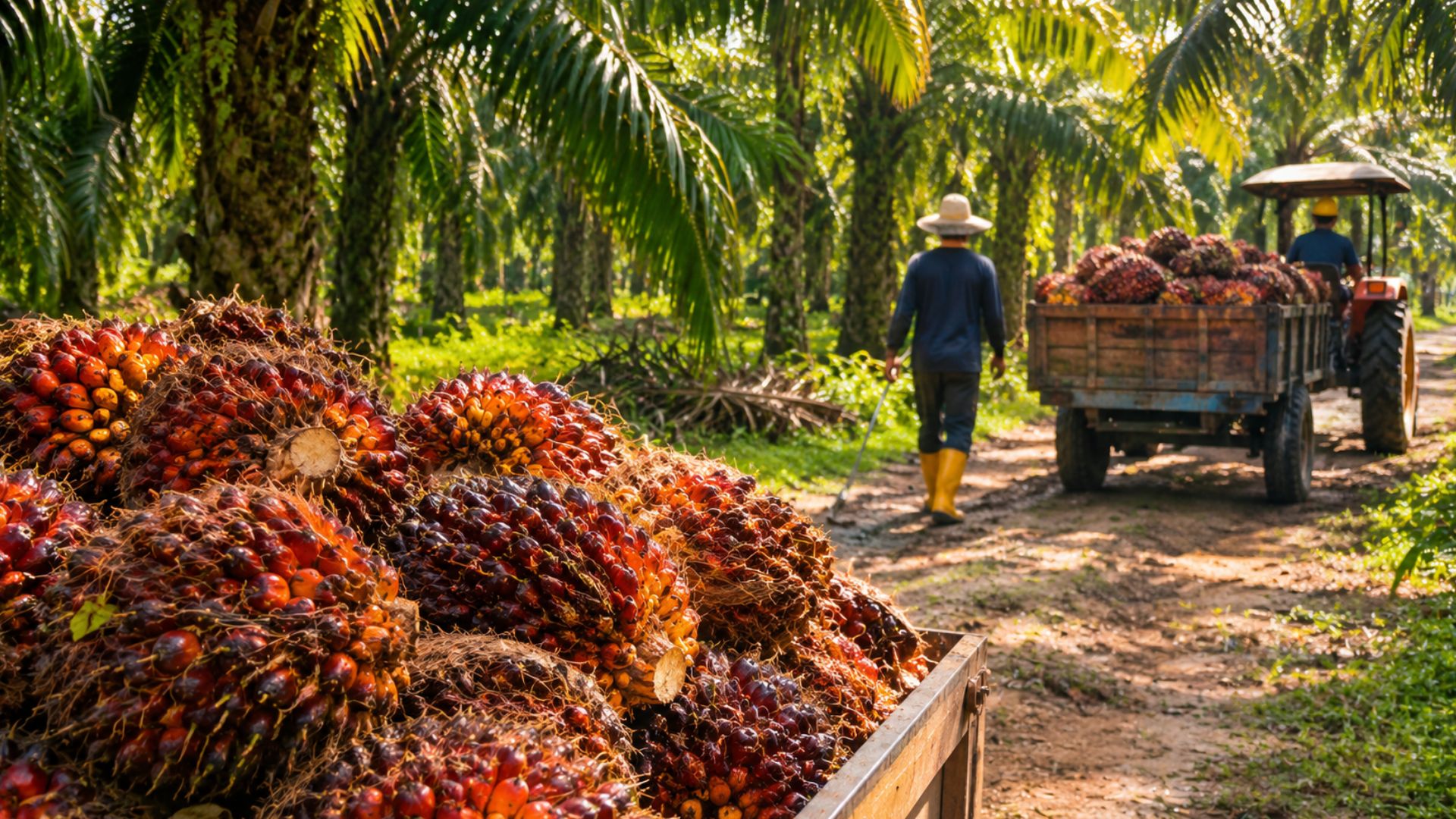







Malaysian palm oil production increased by 1.7% to a record monthly high of 2.15 million tonnes in October, following strong output in September. The combination of hot weather associated with El Nino and intermittent rainfall may have accelerated fresh fruit bunch (FFB) ripening, contributing to exceptionally high production in both September and October.
In terms of exports, shipments surged by 55.7% to 1.71 million tonnes in October, the highest monthly volume in 2 years. The strong rebound was partly attributed to shipments carried over from September due to limited vessel availability.
India was Malaysia’s largest palm oil export destination in October, with shipments reaching 534,000 tonnes, bringing total exports to 3.1 million tonnes in the first 10 months of 2026. For the full year, Malaysia’s palm oil exports to India are expected to reach 3.6 million tonnes, the highest annual volume since 2019.
Global vegetable oil prices trended lower in November, with Malaysian palm oil recording the largest decline of 9%, compared to 2% for Argentine soybean oil and 3% for sunflower oil. European rapeseed oil prices remained largely unchanged. The sharper drop in palm oil prices mainly reflected comfortable near-term supplies in Southeast Asia.
The recent weakness in palm oil prices presents a buying opportunity for forward shipments, particularly for delivery in Q1 2027. Palm oil is now the most competitively priced vegetable oil across major markets. As of mid-November, palm oil traded at USD175 per tonne below soybean oil and USD310 per tonne below sunflower oil in India. These discounts are expected to encourage restocking in India after Diwali and ahead of the wedding season, particularly as the impact of El Nino on Southeast Asian palm oil production is expected to become more evident from Q2 2027 onwards.
Similarly in China, palm oil traded at a discount of USD70 per tonne to soybean oil in November 2026, ending a price premium that had persisted since July 2024. This price advantage is expected to encourage greater use of palm oil in blended vegetable oils. The Lunar New Year in February 2027 will also coincide with Ramadan, potentially supporting higher vegetable oil consumption and palm oil demand.
India typically imports 70-75% of its sunflower oil requirements from the Black Sea region. However, Argentina overtook Russia and Ukraine as India’s largest sunflower oil supplier in the second half of 2026, as the Russia-Ukraine conflict disrupted crushing and exports. Around half of Ukraine’s sunflower seed crushing industry reportedly halted operations, while there have been no sunflower oil shipments from Ukraine to India since July 2026.
Tight sunflower oil supplies from the Black Sea could persist into Q1 2027 unless the conflict eases and exports recover. As a result, some Middle Eastern countries may become more dependent on palm oil imports to offset the supply shortfall and reduce their exposure to elevated sunflower oil prices ahead of Ramadan.
Palm oil supplies are expected to remain comfortable in early 2027 due to high carryover stocks, but Malaysia’s palm oil stocks could decline rapidly from Q2 onwards if lower Indonesian exportable supplies lead to higher demand for Malaysian palm oil. In 2024, Malaysian palm oil exports reached 16.9 million tonnes following El Nino production losses in Indonesia. A similar trend is projected for 2027, with Malaysian exports potentially reaching 17 million tonnes.
Looking ahead, crude palm oil prices are expected to remain above RM4,100 per tonne in December, with most bearish factors already priced in. Further support could come from geopolitical uncertainties, possible Indonesian government intervention in exports amid an expected production decline and the risk of Malaysian oil palms entering a biological resting phase following 2 consecutive years of record production in 2025 and 2026.