
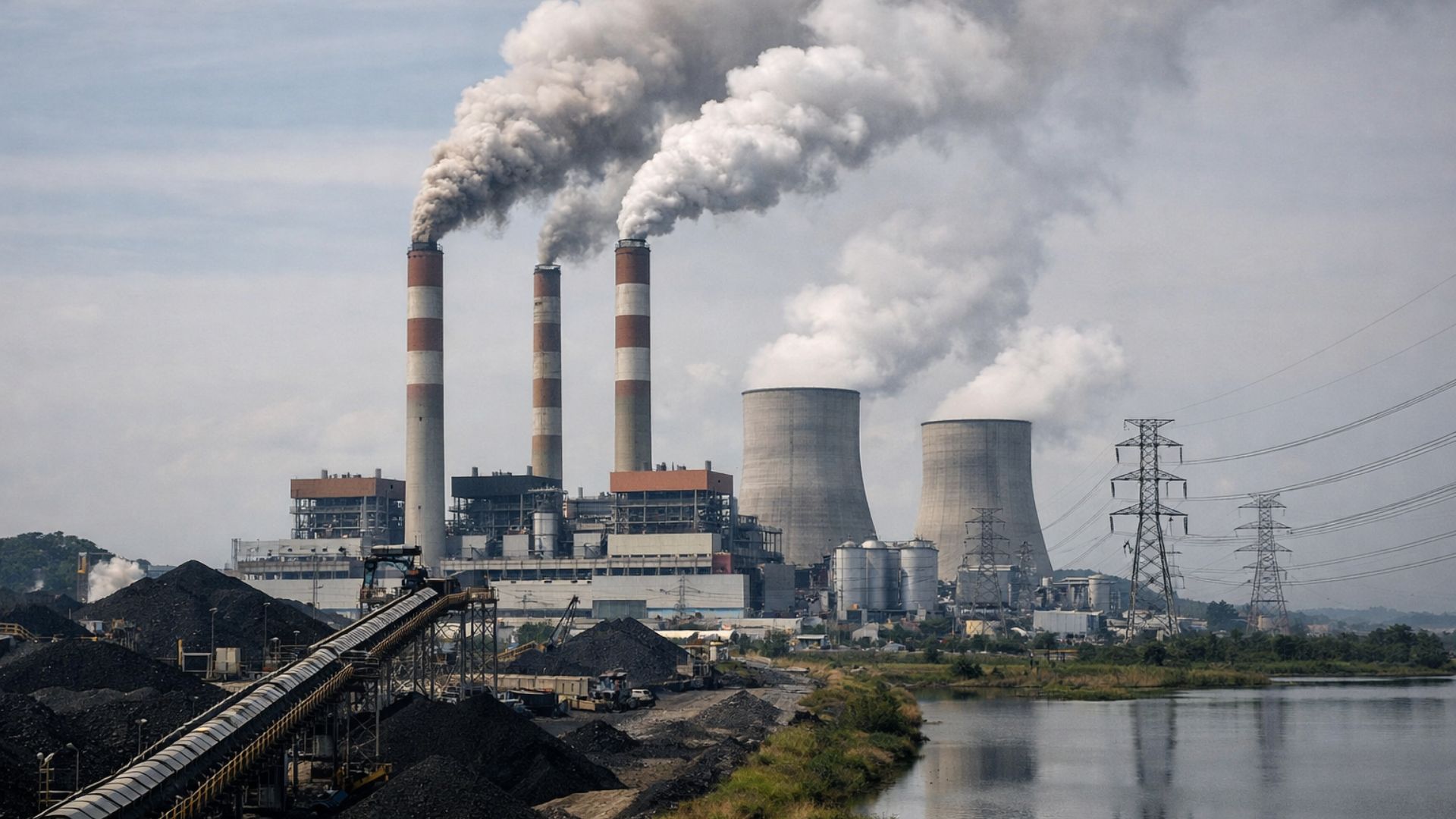







An International Energy Agency analysis cited by the Associated Press reports that coal demand in Southeast Asia is increasing faster than in most other regions, driven by growing electricity needs in countries such as Indonesia and Vietnam. The trend underscores the structural challenge facing regional governments as they attempt to expand renewable energy while maintaining grid reliability and energy security.
Key Facts At A Glance
- IEA analysis indicates Southeast Asia’s coal demand is rising faster than most other regions.
- Growth is linked to expanding electricity consumption in emerging economies.
- Indonesia and Vietnam are among the largest contributors to regional coal use.
- Coal remains a central fuel for power generation across several ASEAN member states.
- Rising coal demand presents challenges to emissions reduction targets.
- Renewable energy deployment is increasing but has not yet displaced coal growth.
Coal consumption across Southeast Asia is projected to continue growing through the end of the decade, according to analysis from the International Energy Agency (IEA) cited in recent reporting by the Associated Press. The report states that coal demand in the region is expanding more rapidly than in other parts of the world, reflecting strong economic growth and rising electricity needs.
The IEA’s broader data shows that coal remains a dominant source of power generation in several ASEAN economies, particularly Indonesia and Vietnam, where it supports baseload electricity supply. Despite increased investment in solar, wind and hydropower projects, coal-fired capacity continues to play a substantial role in meeting demand.
According to the Associated Press report, regional coal demand is expected to grow by more than 4 percent annually through the end of the decade, even as some advanced economies reduce coal consumption. The persistence of coal use is linked to cost considerations, domestic resource availability in countries such as Indonesia, and concerns about maintaining grid stability during periods of renewable intermittency.
Transition Pressures
Governments across Southeast Asia have announced renewable energy targets and net-zero commitments, but the IEA analysis indicates that fossil fuel demand growth—particularly coal—remains closely tied to rising electricity consumption and industrial expansion. This creates a dual-track energy pathway in which renewables are expanding, but not yet at a pace sufficient to offset coal growth.
The continued build-out and operation of coal-fired generation capacity complicates efforts to reduce power-sector emissions and align with global climate objectives. At the same time, policymakers face the challenge of balancing decarbonization goals with affordability and energy security requirements.
Public reports emphasize that while renewable energy investment in Southeast Asia is accelerating, coal remains structurally embedded in several national power systems, making near-term displacement difficult.