
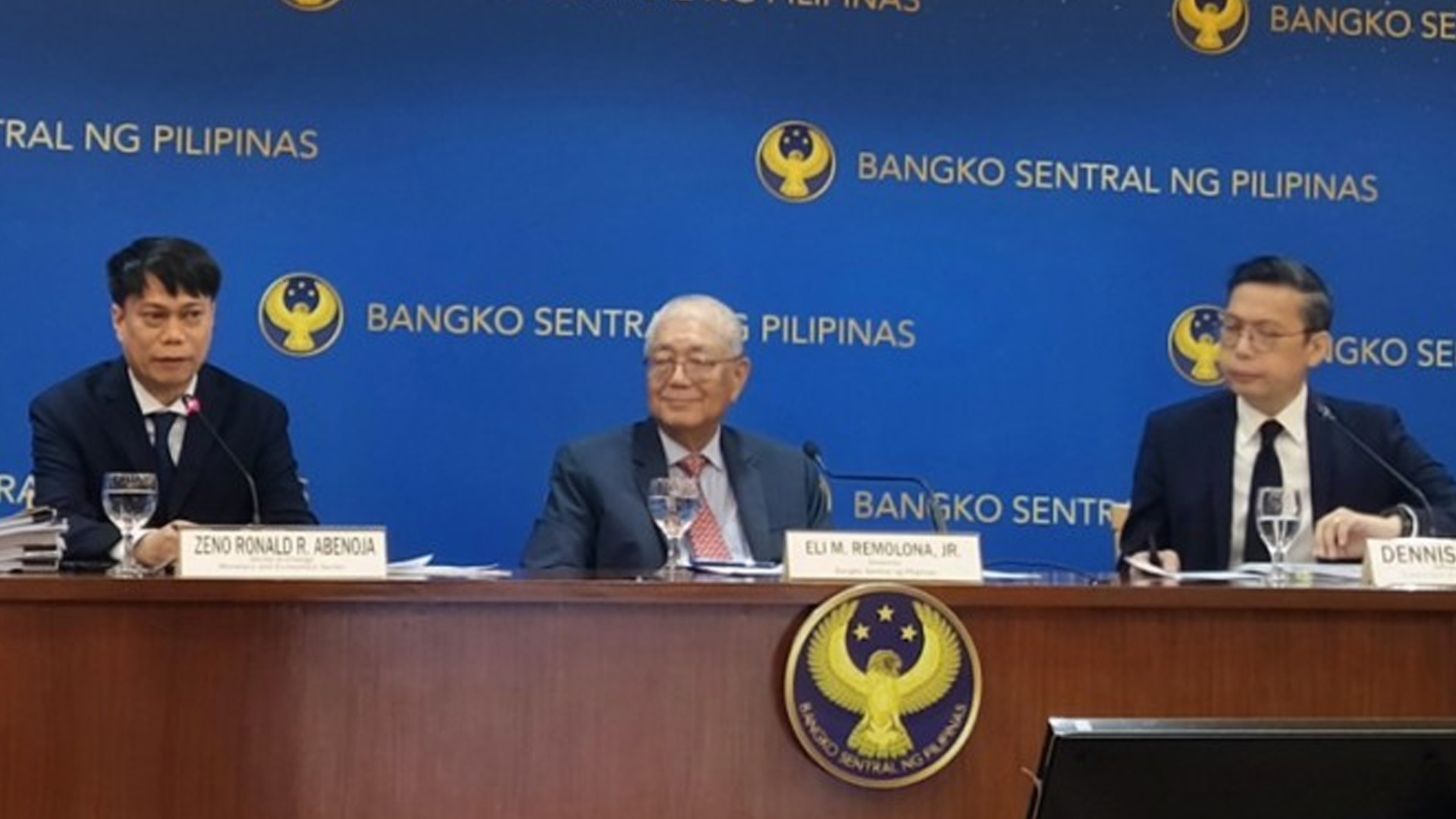







The Monetary Board of the Bangko Sentral ng Pilipinas (BSP) resumed its easing cycle on Thursday, cutting interest rates by another 25 basis points amid decelerating inflation.
The latest cut brings the BSP’s target reverse repurchase (RRP) rate by 25 basis points to 5.50 percent.
The interest rates on the overnight deposit and lending facilities were also adjusted to 5 percent and 6 percent, respectively.
In a briefing, BSP Governor Eli Remolona Jr. said the central bank’s latest inflation forecasts declined from the previous meeting in February.
The risk-adjusted inflation forecast for 2025 fell from 3.5 percent to 2.3 percent, while the forecast for 2026 declined from 3.7 percent to 3.3 percent.
The risk-adjusted inflation forecast for 2027 is at 3.2 percent.
“Inflation expectations also remain within target. The risks to the inflation outlook have also eased and continue to be broadly balanced from 2025 to 2027,” Remolona said.
He said the Monetary Board’s latest decision already took into account the effect of the 17 percent US tariff that would be imposed on the Philippines.
“We factored them in. We have looked at global models. The advantage of the announcement of the reciprocal tariffs is we now have numbers to feed into the analysis. That’s a big thing,” Remolona said.
“It clears up a lot of the uncertainty. Of course, there’s a 90-day suspension of these tariffs, and the tariffs themselves could change. So, there’s still some uncertainty, but there’s less of it than before.”
Remolona, meanwhile, said upside pressures include the possible increase in transport charges, meat prices, and utility rates while downside risks are linked to the effects of lower rice import tariffs and the expected impact of weaker global demand.
According to the BSP chief, the more manageable inflation outlook and the risks to growth allow for a shift to a more accommodative policy stance.
He said the Monetary Board is “contemplating” further rate cuts this year.
“We can’t tell you exactly how many more cuts, but definitely further cuts this year. By the way, we’ll still do it in baby steps, we’ll still do it 25 basis points at a time,” he said.
While the Monetary Board has reduced policy rates by 100 basis points since last year, Remolona said the current policy is still “slightly restrictive.”
“We’re still somewhat below capacity, which means we have some room to cut without causing inflation ourselves. Yes, so somewhat more restrictive still,” he said.
Meanwhile, BSP Assistant Governor Zeno Abenoja said previous policy increases continued to have some impact on domestic demand.
“But we are dialing it down 100 basis points now, and that has contributed to maintaining the growth momentum. But there’s still room to go further, to dial down, make the monetary policy less restrictive moving forward and that should help economic growth move… the momentum to be maintained,” Abenoja said. (PNA)